

They say everything is bigger in Texas. That certainly seems to be the case for the total amount of unclaimed property in the state. According to the Comptroller’s Office, the amount of unclaimed money in Texas totals nearly $11 billion.
These are assets the state wants to return to its rightful owners. We’re talking about assets like cash, dividends, unclaimed payroll checks, and safe deposit box contents. And yes, the state even includes mineral interest and royalties in the mix.
But here’s the really interesting part…
Whether you’re a lifelong Texan, lived in the state for a short time, or have relatives who’ve lived in the state, you’ll want to pay close attention. That’s because the state believes there’s a significant chance some of that missing money actually belongs to you. And they’re making it easy for you to find out.
Quick Takeaways
- Record Returns: In the 2025 fiscal year alone, Texas returned a record-breaking $450 million to rightful owners.
- Free Online Search and Claims Process: The Texas Unclaimed Property site is a division of the Texas Comptroller’s Office. They have a free, online tool anyone can use to search for and claim money that belongs to them.
- No Expiration Date: There is no statute of limitations on Texas unclaimed property. The state will hold your money indefinitely until you claim it.
- You Could Be Owed Thousands: I did a quick scan of the Texas unclaimed property database. I saw amounts ranging from a few dollars all the way up to several thousands of dollars per account. Some folks had multiple accounts with money owed them.
What exactly is Texas unclaimed property?
When a business loses track of you, they can’t just keep your money or other assets and add it to their profits. A few examples of these businesses include banks, utility companies, landlords, security brokers, insurance companies, and employers.
The most common reasons for lost contact include:
- Relocation: People move and companies don’t have record of their new address.
- Forgotten accounts: Sometimes people forget about a bank account they rarely use, leaving it dormant for many years.
- Uncashed payments: You might lose or forget to cash a payroll check, utility refund, or dividend payout.
- Death: Someone passes away and their heirs don’t know about the asset in question.
After a period of no contact (known as the abandonment period), Texas law requires businesses to turn those assets over to the Texas Comptroller. The abandonment period varies from one to 15 years, depending on the type of account.
For example, the abandonment period for wages, payroll, and salaries is one year. The abandonment period for bank accounts, matured certificates of deposit and insurance proceeds is three years. For safe deposit box contents, it’s five years. And for traveler’s checks, it’s 15 years.
What does Texas do with unclaimed property?
The state holds unclaimed property in a special fund, acting as a permanent custodian until the owner or their heirs come forward.
Common examples of what the state is currently holding include:
- Dormant bank accounts and uncashed dividends.
- Forgotten utility deposits (such as old electricity or water bills).
- Unclaimed payroll checks or commissions from former employers.
- Overpayments on insurance premiums or medical bills.
- Forgotten contents of safe deposit boxes.
- Mineral interest and royalties for unpaid shares from oil and gas production.
- Trust funds or escrow accounts.
- Life insurance proceeds.
It’s important to note that the Comptroller does not handle abandoned vehicles or real estate. This search is strictly for financial assets and physical valuables.
Is the Lone Star State holding your money? How to search for your unclaimed money in Texas
Step 1: Visit the Official “Claim It Texas” Portal
Start your search at ClaimItTexas.gov. This is the only official, state-approved website to find unclaimed money in Texas.
Be wary of any third-party “finders” who contact you offering to do the search for you. They often charge a fee for a service you can do yourself for free.
Here’s what the website looked like on the day I visited it:
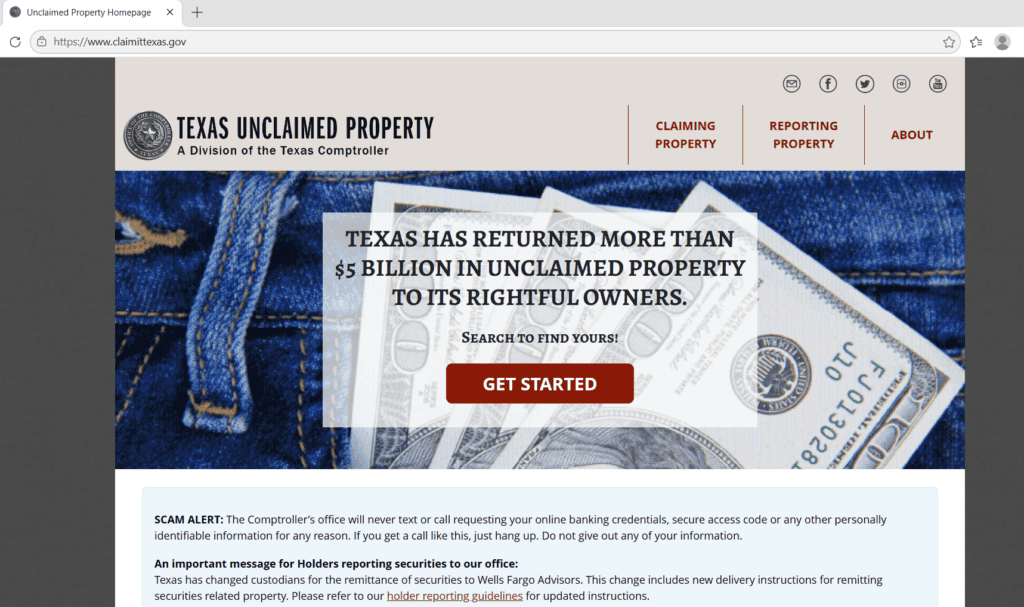
As you can see, the site warns users to be on the alert for scammers who pose as Comptroller officials requesting personal information via text or phone calls. I’ve noticed similar alerts on Comptroller websites for other states.
Step 2: Enter Your Search Criteria
Click the “Get Started” button. From there you’ll be taken to this screen that allows you to begin your search for unclaimed property:
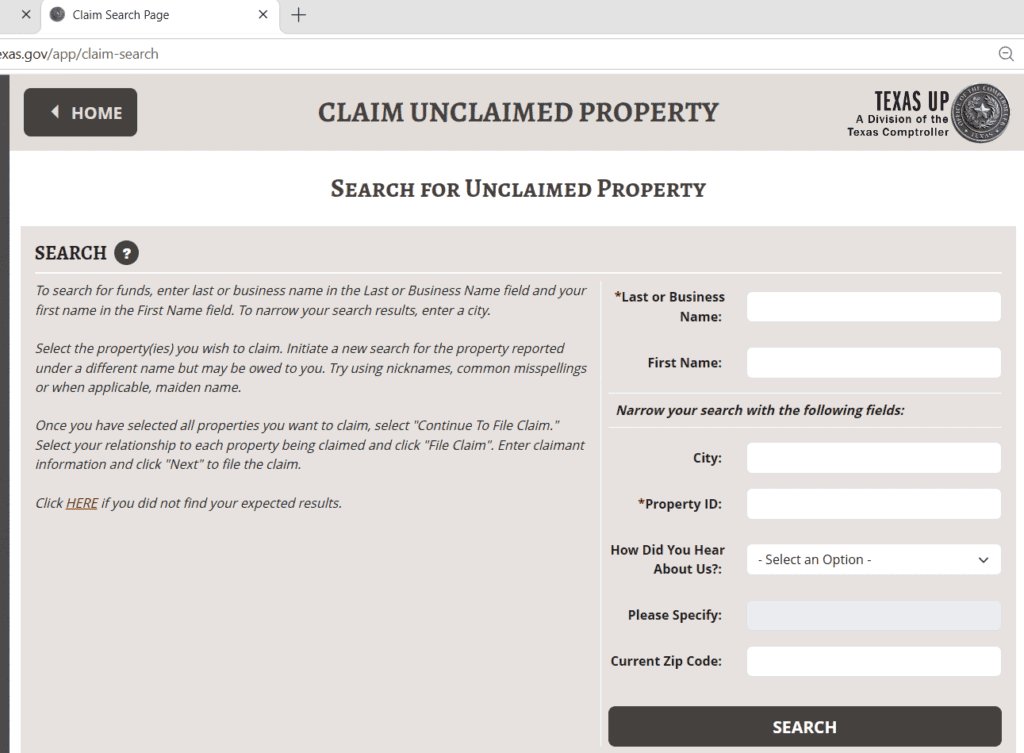
Type in your last name and first name. To narrow down the results (especially if you have a common name), you can also enter your city or zip code.
If you’ve received an owner’s notice in the mail and have a property ID number, you can enter it on this page.
TIP: Don’t just search your current name. Search for maiden names, common misspellings, nicknames, names of deceased relatives, or even the names of businesses you may have owned in the past.
Step 3: Identify Your Property
The system will show the unclaimed properties that match the name you searched for, starting with exact name matches first. The list will then show properties with similar names to the one you entered.
I have to say I was impressed with the amount of detail the Texas Unclaimed Property system provided. Over the past few months, I’ve tested out systems from other states. The Texas database provides a lot of information in an easy-to-read report.
The report shows the following:
- Property ID number (this is the number the state assigns to each unclaimed property).
- Owner’s first and last name.
- Address (last known associated with the property).
- Holder name (this is the company/business that turned the property over to the state).
- Property type (For example, here are some of the property types listed when I did a test search: refund check, pension check, accounts receivable credit balance, book-entry mutual fund shares, death benefit due beneficiaries.)
- Dollar value of the property.
- Year reported.
This amount of information helps you determine if you’ve found a match. If you see a match, click the “Claim” button next to the property.
Step 4: File Your Claim
Once you’re done identifying your property, you’ll move on to the next step and file your claim.
Click the “CONTINUE TO FILE CLAIM” button.
Since I didn’t have a claim to file, I didn’t go through with the rest of the claim filing process.
However, if you go to the “How to Claim” page of the Texas site, you’ll find an excellent explanation of the steps you’ll need to complete to file your claim, upload documents (if needed), and track your claim’s progress (see below screenshot).
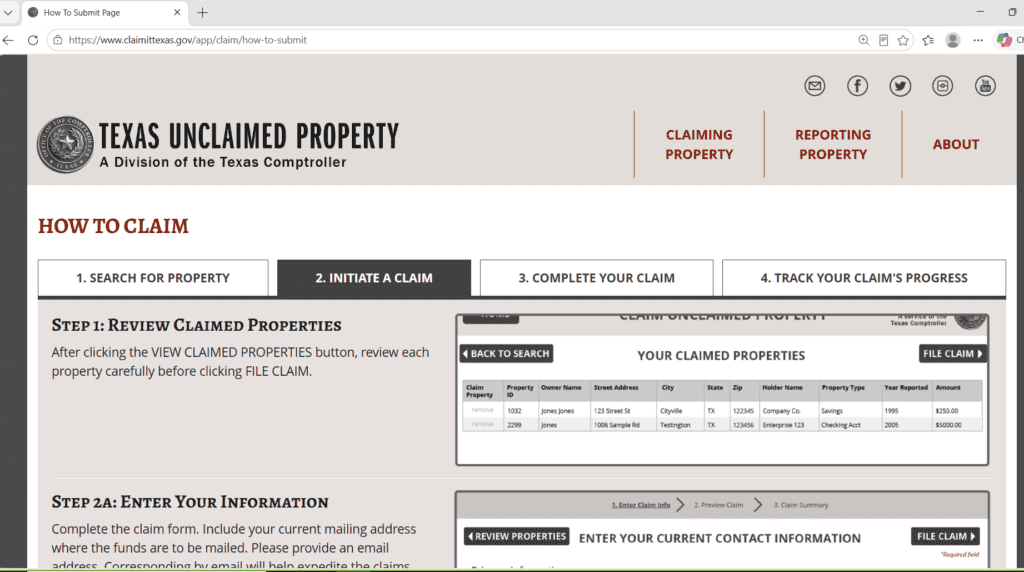
Initially, you’ll need to provide some basic information for the property you wish to claim:
- Your current mailing address where you want the state to mail your funds.
- An email address.
- Relationship to the owner of the property.
After you submit your claim, the system will generate a Claim ID. The state will also email it to you. You’ll use this Claim ID to check the status of your claim.
What happens after you file?
The Texas Unclaimed Property Division will notify you if they need additional documentation from you to verify your claim and issue your check. They might require a photo ID, Social Security number, or beneficiary proof in the case of an inheritance. At any time, you can check the status of your claim online using your Claim ID.
FAQs: Your Texas Unclaimed Property Questions Answered
Is there a fee to file for unclaimed property?
No. Searching for and completing the application process for your unclaimed money in Texas is a free service provided by the state.
Do I need a lawyer or an asset locator to find unclaimed money in Texas?
No. While asset locators are legal in Texas, they are capped by law on how much they can charge (usually 10%). However, there is nothing an investigator can do that you cannot do yourself for free on the official website.
Can I claim money for someone who has passed away?
Yes. You will need to provide proof that you are the legal heir or the executor of the estate. The Claim It Texas portal has a specific workflow to guide you through the paperwork.
Can I receive my unclaimed property payment as a direct deposit?
No, the Texas State Controller’s office does NOT issue payments through direct deposit or wire transfers. They issue unclaimed property payments through physical checks they send to you via standard U.S. mail.
How long does it take to get your money from Texas unclaimed property?
While finding unclaimed money in Texas is relatively easy using the state’s website, it may take some time for you to receive your money. State officials say people with simple claims can expect to receive their money in a few weeks.
However, I saw the following notice when I reviewed the Texas unclaimed property site:
“NOTE: Due to the current high volume of claims, please be aware that processing time may take longer than usual. In addition, if you did not upload all the requested documents, your claim may also be delayed.”
Also be aware that complex claims take longer to process. For example, claims regarding the account of a deceased relative that involve probate or a will may require more time to process.
Start your unclaimed property search today
With nearly $11 billion waiting to be returned, the Texas Comptroller’s office is essentially running a massive “lost and found.” Whether it’s a $35 utility refund or a $5,000 forgotten insurance payout, that money is better off in your pocket than in the state’s coffers.
And if you’ve lived in California (or have relatives who do), you’ll want to check out our article on unclaimed property in California. The Golden State has $15 billion in unclaimed property. Between Texas and California, that’s a total of approximately $26 billion in money that needs to get back to its rightful owners.